Have you ever felt inspired by something life-changing, only to watch that excitement slowly fade away? Most of us have experienced moments when truth seemed close enough to touch, yet somehow never took deep root. That is exactly why the Parable of the Sower still speaks so powerfully today.
Retelling the Story
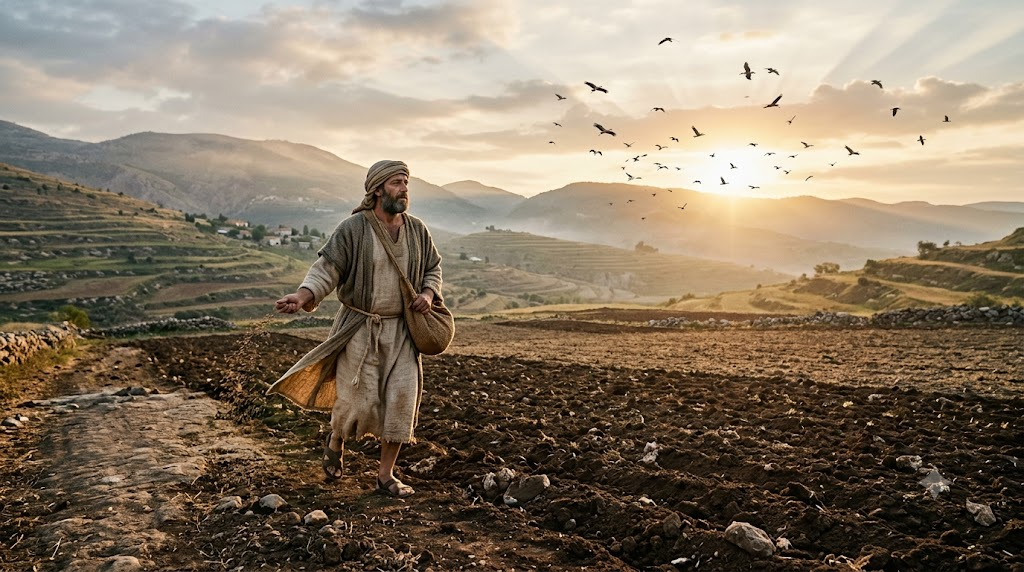
One day, Jesus sat beside the Sea of Galilee while a large crowd gathered to hear Him teach. Instead of delivering a lecture, He told a simple story about a farmer walking through his field, scattering seed by hand.
As the farmer sowed, the seed landed in different places.
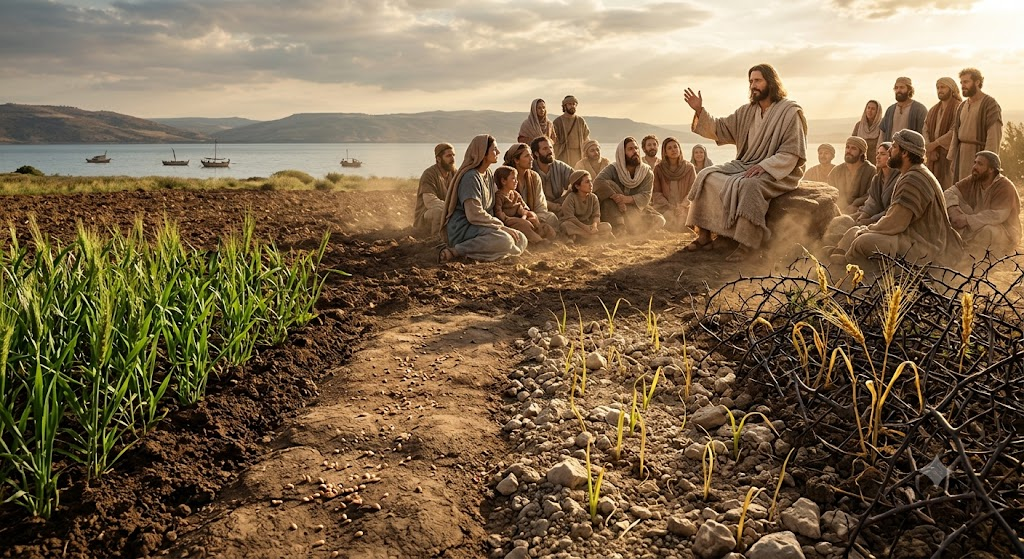
Some seed fell along the path. The ground was hard, and before the seed could take root, birds swooped down and ate it.
Some seed landed on rocky ground. It sprang up quickly because the soil was shallow. But when the hot sun rose, the young plants withered because they had no deep roots.
Other seed fell among thorns. As the plants grew, the thorns grew faster, choking them until they could no longer produce a harvest.
Finally, some seed fell on good soil. There it took root, grew strong, and produced an abundant harvest—thirty, sixty, or even one hundred times what had been planted.
Jesus later explained that the seed represents the Word of God, while the different soils represent different conditions of the human heart. The message remains the same, but the response determines the outcome.
Bible Reference
Matthew 13:1–23
The Story’s Turning Point
The most surprising part of the parable is that the farmer keeps scattering seed generously, even though much of it appears to be wasted. The focus is not on the quality of the seed—it is always good—but on whether the soil is prepared to receive it.
Jesus explained each type of soil:
- The path represents those who hear God’s Word but never truly understand it, allowing evil to snatch it away.
- The rocky ground represents people who receive the message with joy but fall away when hardship or persecution comes.
- The thorny ground represents hearts consumed by worries, wealth, and the distractions of life.
- The good soil represents those who hear, understand, and faithfully live out God’s Word, producing lasting spiritual fruit.
Historical and Cultural Context
In first-century Palestine, farmers typically scattered seed before plowing the field. This may sound unusual to modern readers, but it explains why seed naturally landed on paths, rocky patches, and thorn-covered areas. The audience listening to Jesus would have immediately recognized this familiar farming practice.
A lesser-known detail is that many fields contained narrow footpaths used by travelers and workers. These paths became packed so hard that seed could never penetrate the surface. Jesus used this everyday reality to illustrate hearts that have become hardened through unbelief, pride, or repeated resistance to God’s voice.
His listeners weren’t simply hearing a lesson about agriculture—they were being invited to examine the condition of their own hearts.
Spiritual Lessons
1. God’s Word Never Loses Its Power
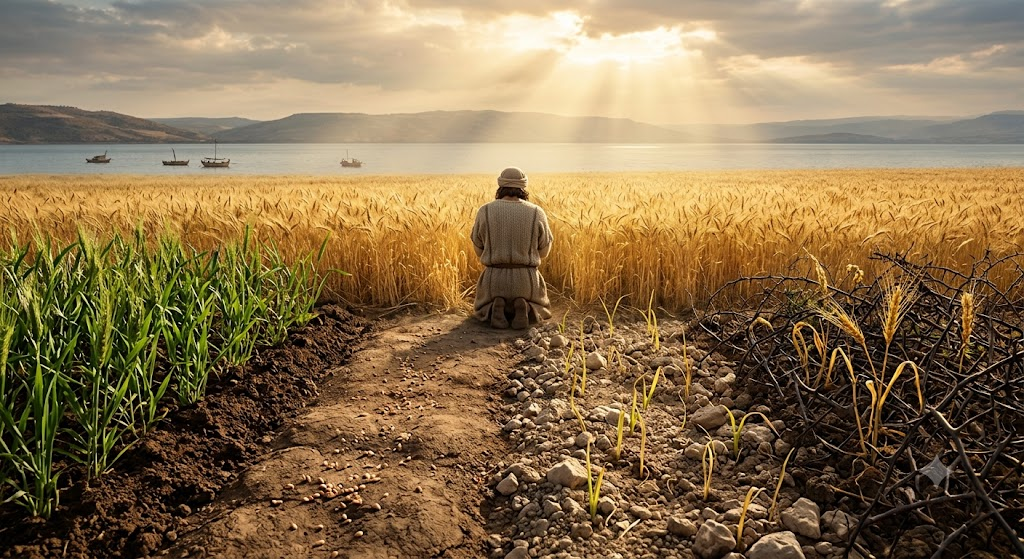
The seed is always good. When spiritual growth doesn’t happen, the problem is never with God’s truth but with our willingness to receive and nurture it.
2. A Deep Faith Is Built Over Time
Quick enthusiasm is not the same as lasting faith. Healthy roots grow quietly beneath the surface through prayer, obedience, perseverance, and trust during difficult seasons.
3. Everyday Distractions Can Crowd Out Eternal Priorities
Jesus warned that anxiety, material success, and the constant pressures of life can slowly choke spiritual growth. We often lose our focus not through one dramatic decision but through countless small distractions.
A fruitful life begins by intentionally making room for God’s voice.
A Question for Reflection
If Jesus looked at the condition of your heart today, which kind of soil would He find? Is there anything—hardness, shallow commitment, or competing priorities—that is keeping God’s Word from bearing its fullest harvest in your life?
Conclusion
The Parable of the Sower reminds us that God continues to scatter His truth generously. Every day brings another opportunity to receive His Word with an open heart, allow it to take deep root, and bear fruit that blesses both our lives and the lives of others.
If this reflection encouraged you, consider subscribing for more daily Bible parables, share this post with someone who needs hope today, and leave a comment answering this question: Which type of soil have you experienced most in your own spiritual journey, and what helped you grow?
