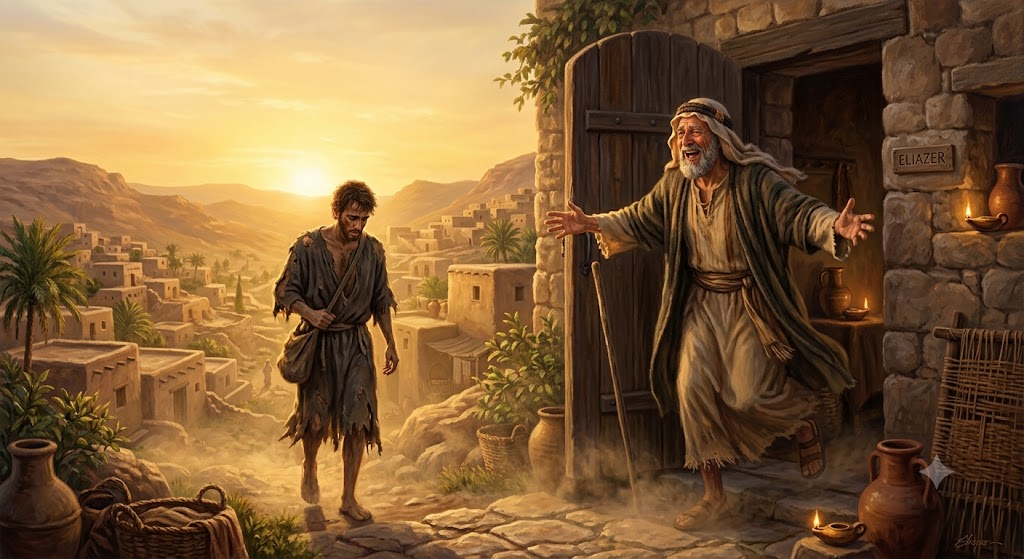
There is a boy standing outside his own house for a long time, too afraid to knock.
This is not just a fictional image. It reflects each of us at least once in life — when we have gone too far, made too many mistakes, and no longer believe we deserve to be welcomed back home.
More than two thousand years ago, Jesus told a story like this. Today, we call it the Parable of the Prodigal Son.
The Original Biblical Story

The parable is recorded in Luke 15:11–32. A man had two sons. The younger son asked his father for his share of the inheritance — an act that, in that culture, was almost equivalent to saying: “I consider you already dead.”
Instead of becoming angry, the father divided his property between the two sons.
Not long after, the younger son gathered everything he had, left his homeland, traveled to a distant country, and wasted his wealth on reckless living until he had nothing left. At that moment, a severe famine struck. He ended up working feeding pigs — the lowest and most unclean job for a Jew — and he was so hungry that he longed to eat the pigs’ food, but no one gave him anything.
In despair, he came to his senses. He remembered that even the hired servants in his father’s house had enough to eat, while he was starving. He decided to get up, return home, and say to his father: “I have sinned against heaven and against you. I am no longer worthy to be called your son. Please treat me as one of your hired servants.”
But while he was still far away, his father saw him — because he had been waiting, watching every day. The father ran to him, embraced him, and kissed him. No rebuke. He ordered his servants to bring the best robe, put a ring on his finger, sandals on his feet, and prepare a feast, because “this son of mine was dead and is alive again; he was lost and is found.”
A Cultural Detail Few People Notice
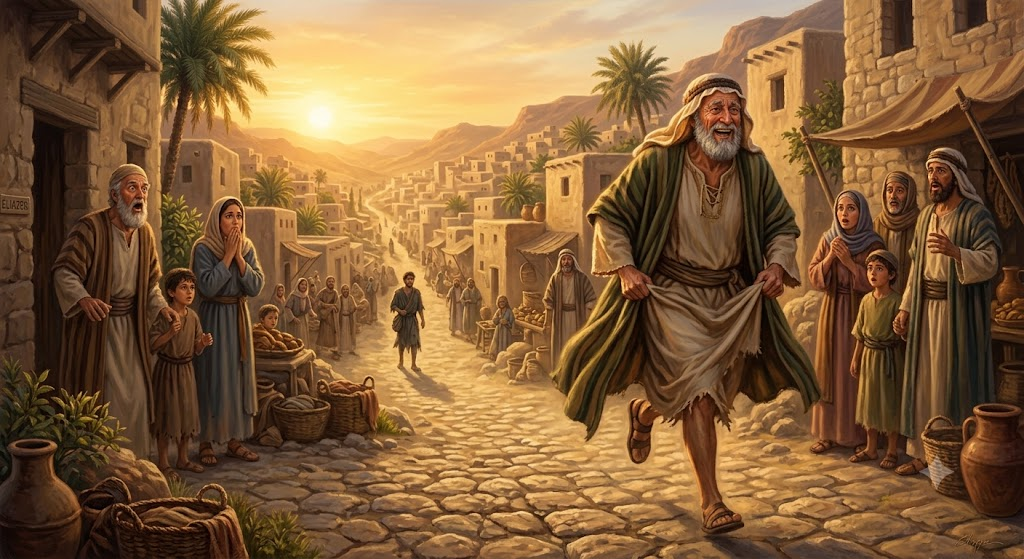
To fully understand this parable, there is an important cultural detail: in ancient Middle Eastern culture, an elderly father of status would never run. Running was considered undignified, something only children or servants did.
Yet the father in this story ran — regardless of dignity, regardless of the village watching — just to embrace a son who had deeply wounded him.
This is the image Jesus used to describe God: a Father who does not wait for us to become perfect before loving us, but runs to embrace us while we are still “far away.”
The Older Brother — The Often Overlooked Character
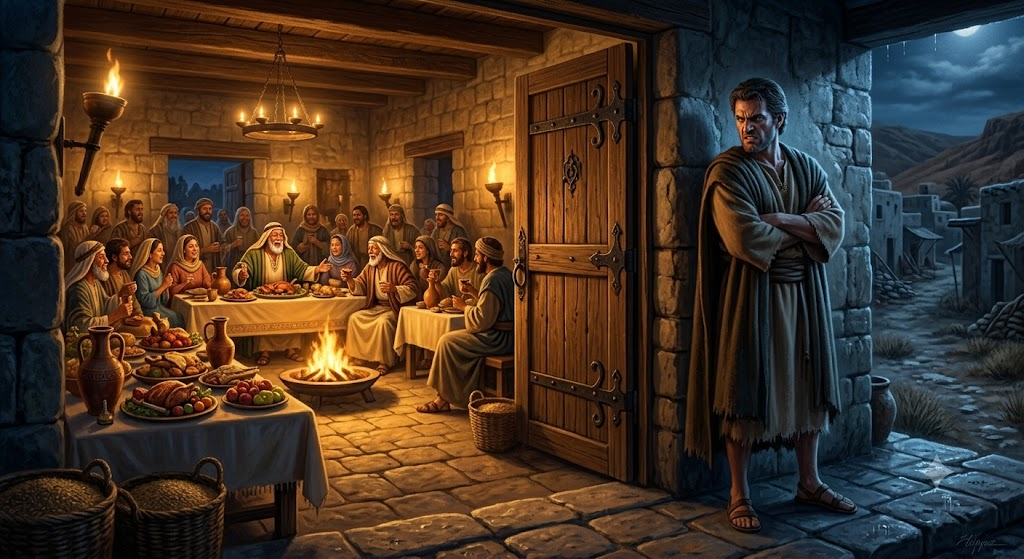
The story does not end there. The older son, when he hears music and learns that his younger brother has returned, becomes angry and refuses to enter the house. He says to his father:
“All these years I have served you and never disobeyed your orders, yet you never gave me even a young goat so I could celebrate with my friends. But when this son of yours who wasted your property with prostitutes comes home, you kill the fattened calf for him!”
This is a warning directed at those who remain “faithful” outwardly but carry bitterness inside — jealousy, self-righteousness, and a lack of genuine love for others.
Lessons We Learn
1. No one is too far gone to return.
No matter how far you have gone or how long you have been away, the door home is still open.
2. The Father’s love is not based on merit.
The father does not ask what the son has done wrong or how much he has wasted. He cares about one thing: the son has returned.
3. Do not become the “older brother.”
Some people never leave physically, but their hearts are distant — filled with judgment, jealousy, and lack of compassion for others.
Where Are You in This Story?
You may be the younger son — feeling like you have gone too far to come back.
You may be the older son — doing everything right but carrying bitterness inside.
No matter who you are, the message does not change: The Father is standing at the gate, waiting for you every day.
Do you relate to this story? Leave a comment sharing your thoughts, or subscribe for weekly reflections on biblical parables.
