A Story of Inheritance, Silence, and Betrayal
Family • Drama • Inheritance
Estimated Reading Time: 8 Minutes
Part 1 — The Phone Call
My father-in-law died on a Tuesday.
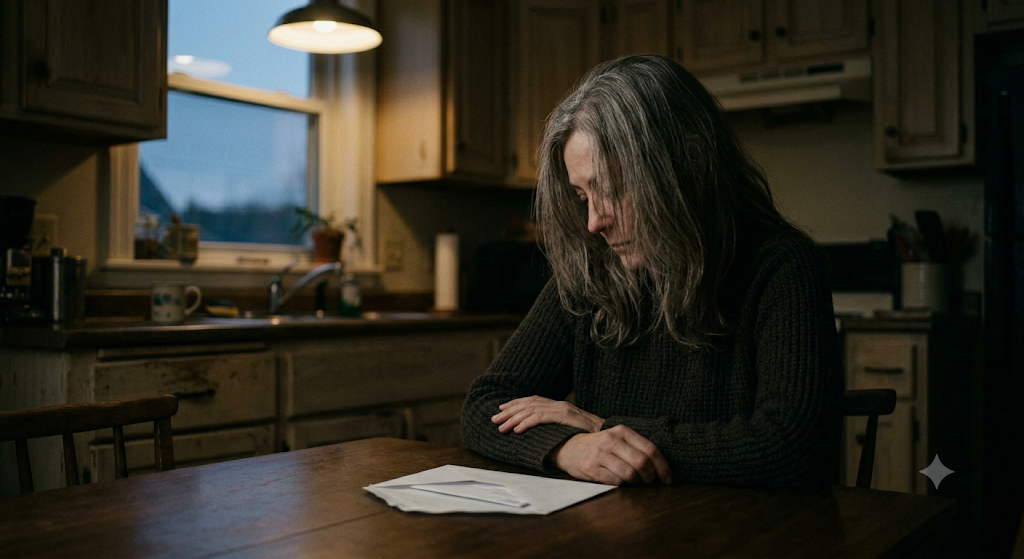
By Thursday, my sister-in-law had already changed the locks on his house while my husband was still choosing a casket.
My name is Karen. I’ve been married to David for twenty-two years.
In that time, I watched his family operate like a corporation with a single shareholder — and her name was Renee.
Renee was David’s younger sister.
She never left their hometown.
Never had to.
She lived four minutes from their parents’ house and never missed an opportunity to remind everyone of it.
Every Thanksgiving:
“I’m the one who drives Dad to his appointments.”
Every Christmas:
“I’m the one who stayed. David got to leave and build his life.”
And she wasn’t entirely wrong.
David did leave.
We both did.
We moved across the country, built careers, raised our children, and created a life of our own.
But we never abandoned family.
We called every Sunday.
We flew home during every health scare.
We showed up whenever we were needed.
What we didn’t realize was that Renee had been planting a story for years.
And by the time Harold — my father-in-law — entered hospice care, that story had taken root.
The day after the funeral, a lawyer called.
He asked David to come to his office.
Alone.
Two hours later David returned home and sat at the kitchen table without removing his coat.
I knew something was wrong.
“What happened?” I asked.
He stared at the floor.
“Dad changed his will six weeks ago.”
My stomach tightened.
“I get the savings account. Renee gets the house, the land, and the business.”
The house alone was worth nearly $800,000.
The land was worth even more.
The auto repair shop Harold had built over forty years had always provided a comfortable living.
David wasn’t angry.
He was silent.
The kind of silence that comes when someone is trying to understand a wound they never expected.
I wasn’t silent.
Not even close.
But what none of us knew was that three days later, Harold’s housekeeper would make a phone call that changed everything.
Part 2 — What the Housekeeper Saw
Her name was Gloria.
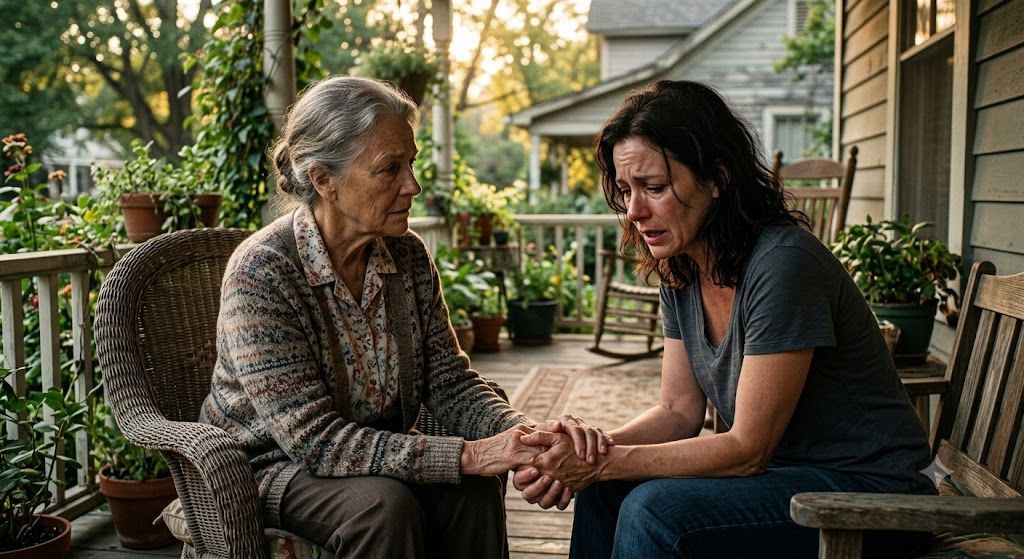
Gloria had worked for Harold for eleven years.
She cleaned his home.
Cooked twice a week.
And often drove him to appointments when Renee was “too busy.”
She called me on a Saturday morning.
Her voice sounded nervous.
“I need to tell you something,” she said.
“It’s about the last time Renee came to visit before Mr. Harold went to the hospital.”
I listened.
Gloria explained that six weeks before Harold died — the exact week the will was changed — Renee had arrived with a man she didn’t recognize.
They stayed for nearly three hours.
Harold seemed confused that day.
More confused than usual.
He kept asking where David was.
Then Gloria heard something.
Something she could never forget.
According to her, Renee told Harold:
“David doesn’t want the house, Dad. He told me himself. He wants you to leave it to me. He signed something. I have it right here.”
Harold was eighty-one years old.
He had been diagnosed with early-stage dementia.
The man who accompanied Renee carried a briefcase.
I sat with that information for two days before telling David.
When I finally did, he became completely still.
Then he said:
“I never signed anything.”
“I never told her that.”
“I haven’t spoken to Renee in six months.”
At that moment, we faced a choice.
Walk away.
Or fight.
David looked across the kitchen table and said only three words.
“Call a lawyer.”
What we discovered next was far worse than we imagined.
Part 3 — The Document
Our attorney’s name was Patricia.
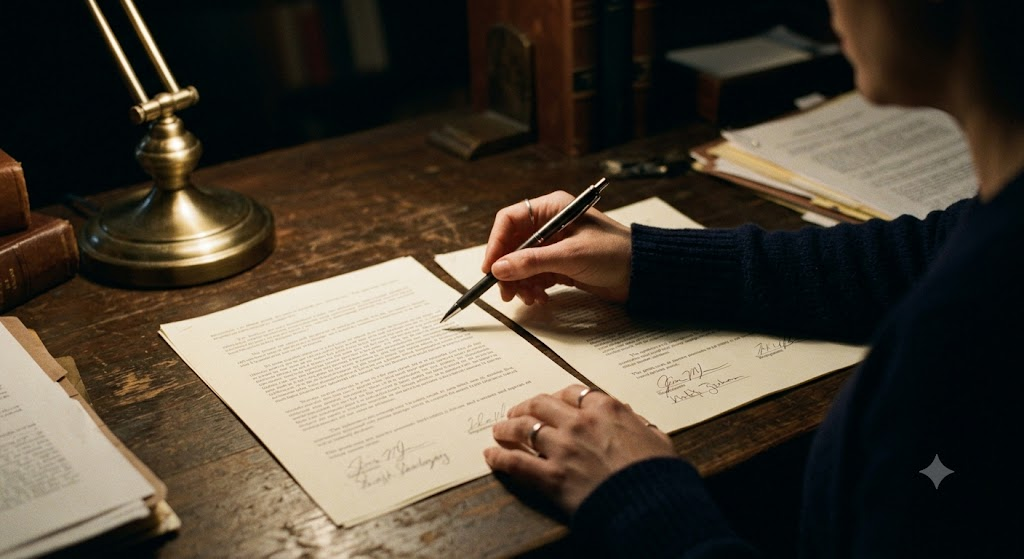
Patricia was sharp, experienced, and impossible to intimidate.
Within a week she requested a copy of the amended will.
At first glance, something felt wrong.
The document had not been prepared by the family’s longtime attorney.
Instead, it had been notarized through an office located in Renee’s area.
Patricia then requested Harold’s medical records.
The records revealed three physician notes written during the six weeks leading up to the amendment.
Each referenced cognitive decline.
Each documented memory issues.
Then Patricia examined the signature.
She compared it to signatures Harold had written only months earlier.
Medical consent forms.
Banking documents.
Even a birthday card he had sent our daughter.
The differences were striking.
She placed the papers side by side and calmly said:
“Either Harold’s handwriting deteriorated dramatically in four months, or someone assisted that signature.”
Then she looked up.
“Either way, we have a case.”
I thought about Harold.
His careful handwriting.
His habit of adding a small star after his signature.
Something he had done for decades.
The amended will contained no star.
That was when I cried.
Not because of money.
Not because of property.
But because an elderly father may have spent his final days believing something untrue about his own son.
And died believing it.
Part 4 — What Renee Said
We didn’t call Renee.
We drove to her house.
David hadn’t seen his sister since the funeral.
She opened the door and froze when she saw Patricia standing beside us holding a folder.
“We need to talk about Dad’s will.”
“And we need to do it now.”
We sat in Harold’s living room.
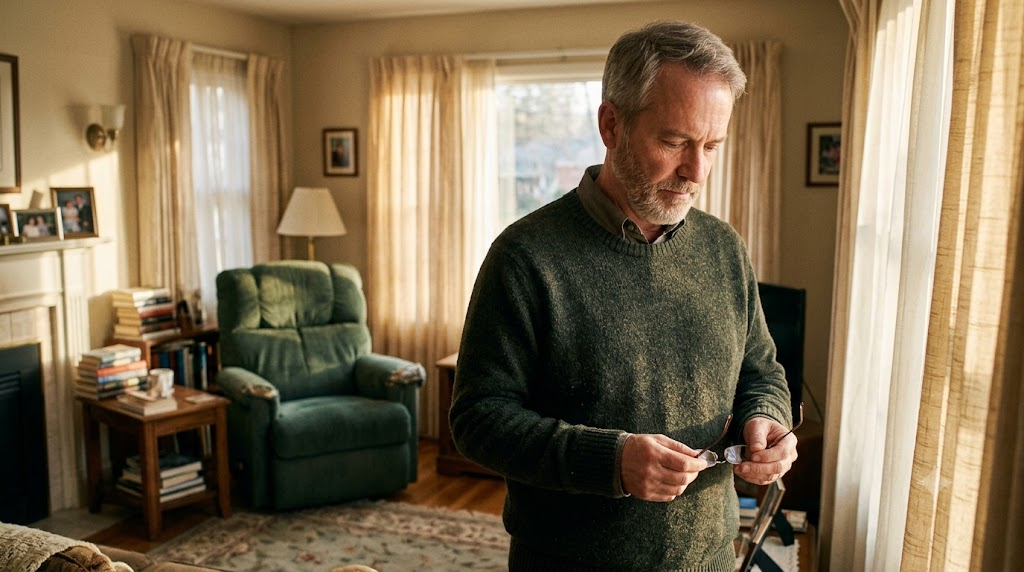
His recliner remained in the corner.
His reading glasses still rested on the side table.
Patricia carefully explained everything we had discovered.
For a long time, Renee said nothing.
Then finally she spoke.
“I did what Dad wanted.”
“He was tired.”
“He didn’t want to deal with the business anymore.”
“I was helping him.”
David’s voice stayed calm.
“He had dementia, Renee.”
“He believed I had agreed to this.”
“Did you tell him that?”
She looked toward the window.
Then she answered.
“He was going to forget anyway.”
The room fell silent.
David stood.
He didn’t yell.
He didn’t argue.
He simply picked up his father’s reading glasses, slipped them into his pocket, and walked out.
Three days later we filed a legal challenge.
The case remains unresolved.
I don’t know how it ends.
I don’t know whether we win.
I don’t know whether this family will ever recover.
But I know this:
Every night I see Harold’s reading glasses sitting on David’s nightstand.
And I think about how easily trust can be broken.
How a lifetime of work can become a battleground.
And how the deepest betrayals often come from the people closest to us.
Reflection
Have you ever experienced conflict over inheritance, family property, or a loved one’s final wishes?
Sometimes the hardest part isn’t the money.
It’s discovering who people become when money enters the room.
Share your thoughts in the comments below.
Your story may help someone else feel less alone.
More Stories Like This
Every week we publish compelling stories about family, secrets, difficult choices, and the moments that change lives forever.
Read more stories on our website.
